
The timber order checklist: grade, moisture and delivery
Put species, grade, dimensions, moisture condition and delivery in one written record before paying.
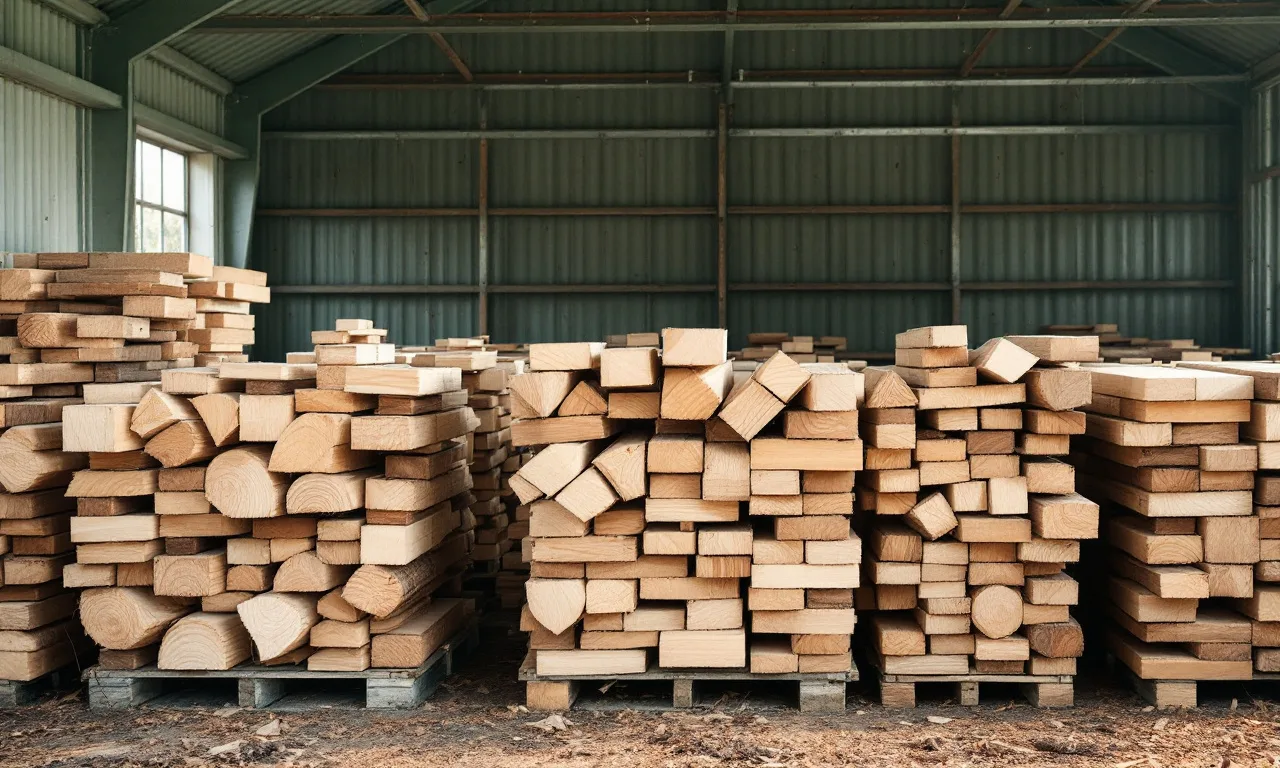
A useful timber order describes what should arrive clearly enough that both sides can check it. Species, grade, size, moisture condition and quantity belong in the same record. Delivery and damage-reporting arrangements belong there too. A short written specification often prevents more trouble than a long conversation built around words such as good, straight or furniture quality.
This article is an educational ordering checklist. Pinewood Notes does not supply timber, arrange deliveries or handle returns for a former operator. Use the checklist with the supplier you choose, and obtain its actual terms before paying. Consumer rights and contract requirements vary by location and are not determined by this page.
Start with the intended use
Tell the supplier what the material will become and which surfaces will be visible. A painted utility cabinet, a clear-finished tabletop and a building component are different requests. The intended use helps frame the specification, but it should not replace the specification itself.
For a furniture project, identify the finished part sizes and any appearance requirements. For structural use, obtain the required grade, species group and other design information through the appropriate professional or standard. Do not ask a supplier's informal reassurance to stand in for an engineering decision.
Write down limitations at your end: maximum transport length, available storage, whether you can machine rough stock and whether you need handling assistance. These practical details can change the order before any board is selected.
Identify the wood precisely
Record the species or commercial group supplied, along with the name the seller uses. If the quotation simply says pine, ask whether a more specific description is available. Keep the answer rather than translating it into a different species name yourself.
Record any treatment, modification or prior use that matters to the project. Untreated new timber, preservative-treated stock and reclaimed boards are not interchangeable simply because their dimensions match. If the history is unknown, decide whether that uncertainty is acceptable before buying.
For a certificate or sourcing claim, ask which document applies to the actual order and what it verifies. A general logo on a website is not automatically a transaction-specific claim. Avoid repeating a sustainability or origin claim in your own project description unless the evidence supports it.
Put grade and appearance into words
Ask which grading system or sales description applies. If appearance matters, describe the accepted characteristics: knot size and condition, visible splits, discoloration, wane or other defects. Be realistic about a natural material, but do not leave the most important requirement unstated.
A photograph can help communicate appearance, yet it should not be the only specification. Lighting, finish and viewing scale change how wood looks. If a particular board is being selected, identify it in a way the supplier can retain through preparation and delivery.
For panels assembled from several boards, discuss whether color or grain matching is part of the service. Do not assume matching simply because the boards share a species name. The pine selection guide gives a practical inspection sequence for individual stock.
Distinguish rough, actual and finished dimensions
Write thickness, width and length with units on every line. State whether the dimensions describe rough stock, supplied dressed stock or the finished parts you intend to produce. Mixed units and unlabeled nominal sizes make an otherwise detailed order ambiguous.
If the supplier performs machining, specify what is included: surfacing, edge preparation, cutting to length or another operation. Ask what tolerances or allowances apply. A board cut near a target length is not the same promise as a finished component made to a precise dimension.
Keep enough material for the preparation you will still do. Do not assume a seller's dressed surface is automatically the final reference surface for every joint. The board-foot and size guide separates physical dimensions from billing conventions.
Agree the quantity basis
State the count and the dimensions of each group of boards. If the price is based on board feet or cubic metres, ask which dimensions and rounding convention are used. A clear unit price is only useful when the billed unit is understood.
For mixed widths or lengths, request a tally or a sufficiently detailed description to check the delivery. If random lengths are part of the offer, state any minimum clear length the project requires. Total volume cannot compensate for every board being shorter than a critical rail.
Keep the project allowance visible in your own calculation. It is your planning margin unless the supplier specifically agrees otherwise. Use the timber tools to verify arithmetic, then check the actual layout separately.
Ask about moisture and storage
Record any agreed moisture specification and how it is assessed. Kiln dried describes a process, while a current moisture condition describes the stock at a particular time. Ask how the boards are stored and protected before delivery.
If you plan to inspect with a meter, understand the instrument's limits and the seller's inspection procedure. A quick handheld reading may be useful for comparison without being the contractual acceptance test. Agree the method before there is a disagreement.
Prepare suitable storage before ordering. Timber left outside because the workshop is full can change condition after it arrives. The home storage note covers support, airflow and keeping the stock identifiable between purchase and preparation.
Make delivery practical
Confirm the delivery address privately with the supplier, along with access restrictions and the contact arrangement for arrival. Ask where the driver is expected to leave the timber, what unloading equipment is included and who is responsible for moving it beyond that point.
Measure narrow passages and storage access before the truck arrives. A board that fits the project may still be awkward to carry through a small doorway. Plan handling appropriate to the size and weight; do not rely on one person improvising with a long, unstable load.
Ask how weather protection is handled in transit and what to do if a delivery cannot be accepted immediately. Keep these arrangements with the order rather than assuming the driver will have discretion to solve every access problem on the day.
Inspect before cutting
Count the boards and compare the labels, species description and dimensions with the order. Inspect visible condition and record any mismatch promptly through the supplier's stated process. Take photographs that show both the overall delivery and the specific issue, where appropriate.
Do not begin cutting disputed material merely to see whether the defect can be worked around. Altering it can make the original condition harder to establish and may affect the supplier's returns process. Ask for instructions and retain the written response.
Separate a delivery problem from normal variation that the specification allowed. The purpose of the checklist is to make that distinction easier, not to promise perfectly identical boards. If the agreed description is vague, a disagreement can remain difficult even with many photographs.
Keep the commercial terms attached
Read the seller's payment, cancellation, delivery, inspection and returns terms before agreeing the order. Ask about custom-cut or specially machined stock, which may be handled differently from standard inventory. This article does not state a universal return window or legal entitlement.
Record the quoted total and the separately listed charges. Confirm whether tax, delivery, machining and handling are included. A price comparison is incomplete if one quotation includes those services and another leaves them to a later invoice.
Save the quotation, confirmation, tally and correspondence together. A simple folder named for the project can hold everything. The important point is that the final agreed version remains distinguishable from an earlier draft or an informal estimate.
A compact order record
Use these headings: intended use; species or group; grade and appearance; treatment or history; dimensions and units; machining; quantity and billing basis; moisture specification; delivery and unloading; inspection procedure; price and terms. Fill each heading with an answer or an explicit unresolved question.
Before paying, read the record as though you were the person picking the stock. Could you identify the right material and know which differences matter? If not, clarify the missing point. The best time to make an order more precise is while both sides can still change it easily.
Source and scope
Chapters 6 and 13 of the USDA Wood Handbook provide background on commercial lumber and moisture control. The order record is an editorial planning aid, not legal advice, a supplier contract or an offer to sell timber. Verify current terms directly with the chosen merchant.
Keep the notebook open.

Choosing a moisture meter for a small woodshop
Compare measuring method, depth, species correction and calibration before choosing a meter for your stock.
26 Apr 2024 · Jonah Mercer