
Solid wood or plywood for a bathroom vanity?
How to tell what a bathroom vanity is really made of, how each material handles moisture, and what to ask before ordering one.
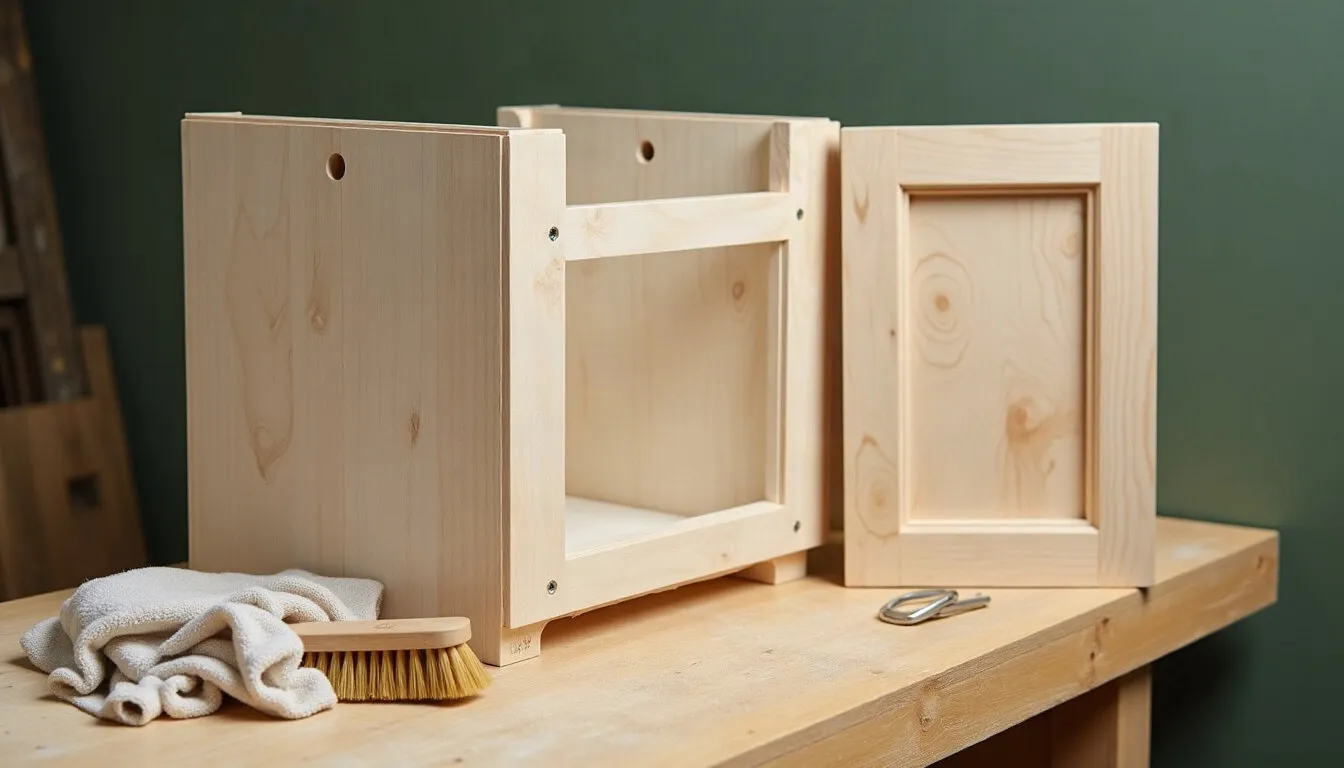
A wooden bathroom vanity lives a harder life than almost any other piece of furniture in the house. Twice a day the room fills with steam, and for the rest of the day the air dries out again. Water lands on the top, runs down the doors and sits in the toe kick. The material inside the cabinet decides how well it copes, and that material is rarely the thing shown in the showroom photograph.
Planning a Scottsdale custom bathroom remodel is easier when you know what to ask about the wood and sheet goods behind the finish. This guide explains the common choices for a vanity carcass and doors, what each label usually means and how to put the right questions to a remodeler or cabinet maker. It is about materials and questions, not plumbing, electrical or waterproofing work, which belong to licensed professionals.
Separate the box from the face
A vanity has two parts that are often made from different materials. The carcass is the box: sides, bottom, back and shelves. The face is what you see: doors, drawer fronts and the face frame, if there is one. A description such as "solid wood vanity" may refer to the face only, with a carcass made from something else.
Ask which parts the material description covers. A full sentence works best: "Is the cabinet box made from the same material as the doors, and if not, what is it?" The answer is not a judgment on quality. It simply tells you what you are comparing when you set two quotes side by side.
Know what the common materials do with moisture
Every wood-based material moves with changes in humidity, but they move in different ways. Solid wood swells and shrinks mostly across the grain, the direction across the width of a board, and hardly at all along its length. Plywood is made from thin layers glued with their grains crossing, so it moves much less in any one direction. Particleboard and MDF, medium-density fiberboard, are made from wood fibers or particles bonded with resin. They are flat and stable in dry conditions but can swell and lose strength if water gets into an unsealed edge.
| Material | Typical use in a vanity | Moisture behavior | What to ask |
|---|---|---|---|
| Solid wood | Doors, face frames, sometimes the whole cabinet | Moves across the grain; needs room to do so | "How are panels allowed to move?" |
| Plywood | Carcass sides, bottoms, shelves | Stable; edges need sealing or banding | "Is the plywood rated for damp rooms?" |
| MDF | Painted doors and drawer fronts | Smooth and flat; swells if edges get wet | "How are cut edges and screw holes sealed?" |
| Particleboard | Budget carcasses, often with a laminate face | Vulnerable at edges and the bottom | "What protects the bottom panel from leaks?" |
None of these is wrong for a bathroom. Each needs a different kind of care in how it is built and finished.
Turn every label into a question
Cabinet descriptions are full of words that sound precise and are not. "Moisture resistant" can describe a specific grade of board or a general claim about a finish. "Furniture grade" has no single meaning across makers. "All wood" can include plywood and MDF, since both are made from wood.
None of this makes the labels dishonest. It makes them starting points. When you read one, ask what it specifically refers to and what it would mean if water reached that part. A careful remodeler will answer in terms of the cabinet in front of you: which board, which edge, which finish.
Ask about edges, bottoms and backs
Water damage in a vanity usually begins in the same few places. The bottom panel collects drips from the trap and supply lines. The toe kick catches water from the floor. Cut edges around plumbing holes in the back are often left raw. Door bottoms take splashes from the counter.
Questions to put in writing:
- "How are the cut edges around the plumbing holes in the back sealed?"
- "What is the bottom panel made of, and is its top surface finished?"
- "Are the door and drawer edges finished on all sides, including the bottoms?"
- "What happens to the toe kick if the floor is mopped or a leak runs under it?"
These questions are about how the cabinet is built, not about what it costs. They also show a remodeler that you are reading the details, which usually leads to more detailed answers.
Expect solid wood to move
If the vanity has solid wood doors or a solid wood face frame, the wood will move with the seasons and with the daily swing from steam to dry air. Scottsdale's desert climate means indoor air is often very dry, and a bathroom can go from humid to dry within an hour. A well-made solid wood door accounts for that, usually with a frame-and-panel construction where the center panel floats in a groove rather than being glued tight.
Ask how the doors are made. "Are the center panels free to move, or are they glued?" is a reasonable question for any maker. A glued solid panel in a bathroom can split or push the frame apart over time. Painted solid wood can also show a fine line at the panel edge each dry season as the panel shrinks back from the paint. That is movement, not a defect, and it is worth knowing in advance.
A hypothetical comparison
Consider two invented quotes for the same vanity size and style. The first describes "solid wood shaker vanity, painted". The second describes "plywood carcass with sealed edges, solid wood face frame, MDF painted doors with sealed edges, finished bottom panel".
The first sounds simpler and may well be a good cabinet. But the description leaves the box material, the edge treatment and the bottom panel unstated. The second gives you something to check. Neither quote is automatically better. The point is that only one can be compared on materials until the first maker fills in the same details.
Ask the first maker to describe the vanity in the same terms as the second. Then compare on materials, construction and finish before comparing on style or price.
Look at the finish as part of the material
A finish is the wood's first defense against water. Paint, lacquer and other clear coats all slow the movement of moisture into the wood, but none stops it entirely, and any break in the coating becomes an entry point.
Ask whether every face of each part is finished, including the inside of the box and the backs of doors. Ask how the finish is applied: in a shop before installation, or on site afterward. Shop finishing usually reaches every edge before assembly, while site finishing may leave hidden surfaces bare. Neither approach is a rule. The answer simply tells you where to look first if a problem appears later.
Ask where the cabinet waits before installation
Wood-based materials respond to the air around them, and that includes the days between delivery and installation. A vanity that sits in a hot garage, a damp corner of a job site or direct sun near an open door can arrive at its final position with doors slightly out of line or panels that have already moved. In a desert climate, the gap between a closed garage in summer and a cooled interior room can be large.
Ask the remodeler where cabinets will be stored once they arrive and how long they usually wait. Many will keep them in the house, in their packaging, in a room that is close to normal living conditions. If a vanity has to wait in a garage, ask how it will be kept off the floor and out of the sun. Also ask who checks the doors and drawers for alignment once it is set and the counter is on. Small adjustments to hinges and slides are normal after installation, and it helps to know in advance who makes them and when.
The pencil list
- Ask which parts of the vanity the material description covers: box, face or both.
- Note the material of the bottom panel and how its edges and top are sealed.
- Ask how solid wood doors are made, and whether the panels can move.
- Record whether all faces, including backs and bottoms, will be finished.
- Photograph the vanity's underside and plumbing openings before the counter goes on.
A vanity is chosen twice, once for how it looks and once for what it is made of, so write the materials down clearly before the order is placed.
Keep the notebook open.
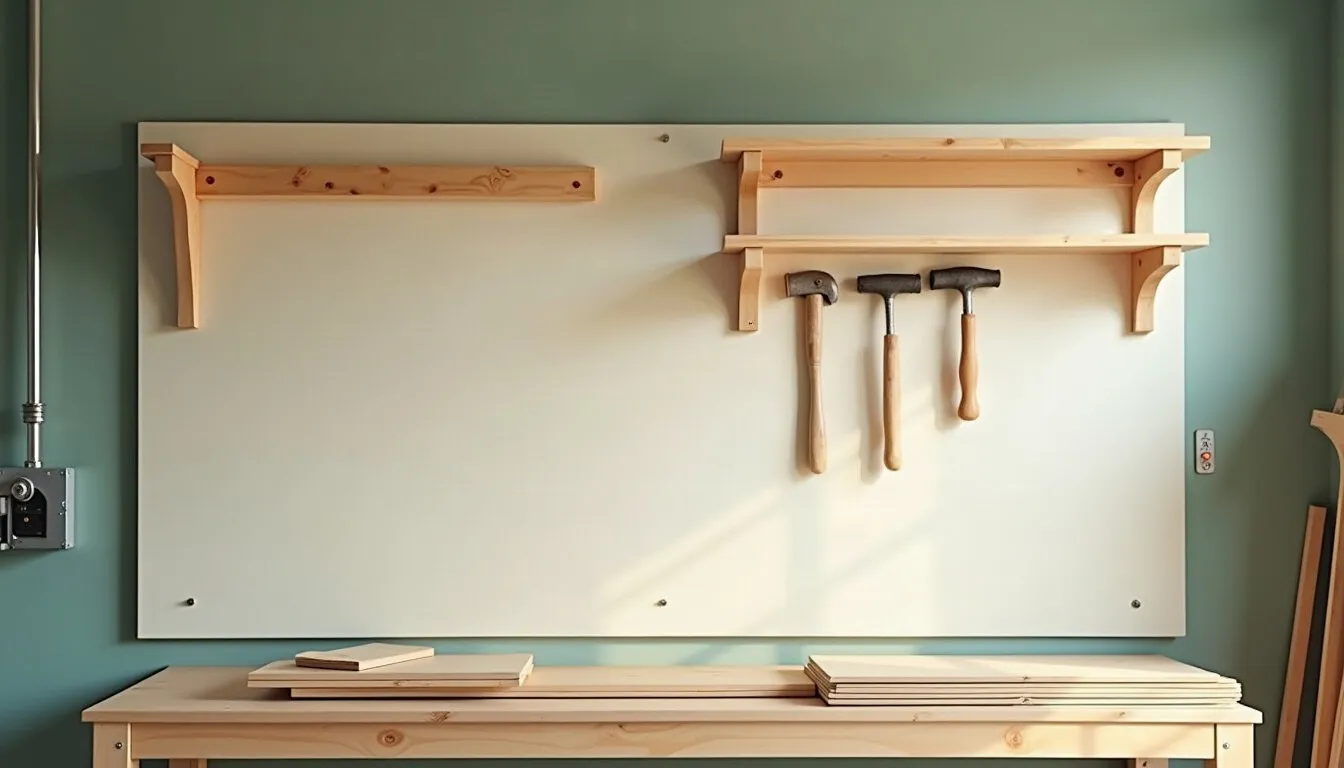
Pine shelving or plywood wall panels for a garage with an EV charger?
How pine boards, plywood and OSB behave on a garage wall, and how to plan shelving around the area an electrician needs for an EV charger.
29 Oct 2026 · Elise Tran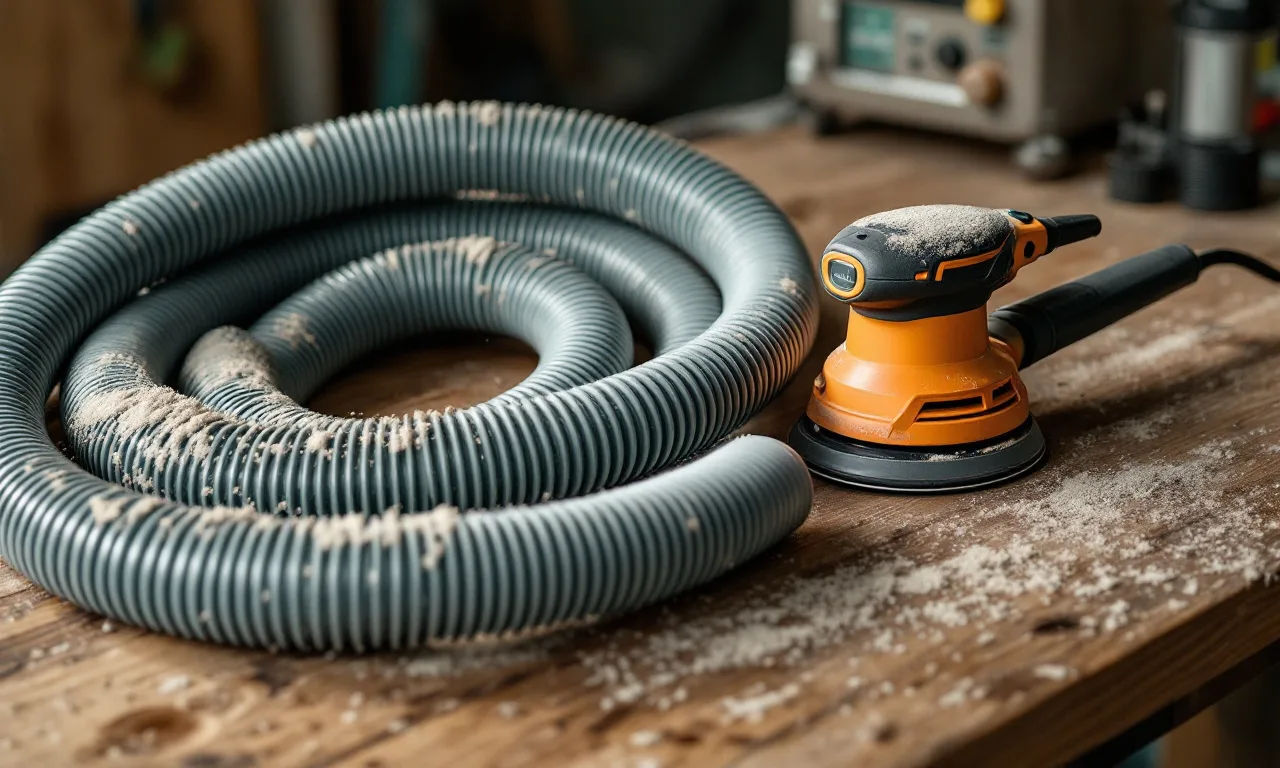
A dust plan for a small woodworking space
Connect source capture, tool compatibility, filtration and maintenance in one practical workshop plan.
17 Nov 2025 · Mateo Briggs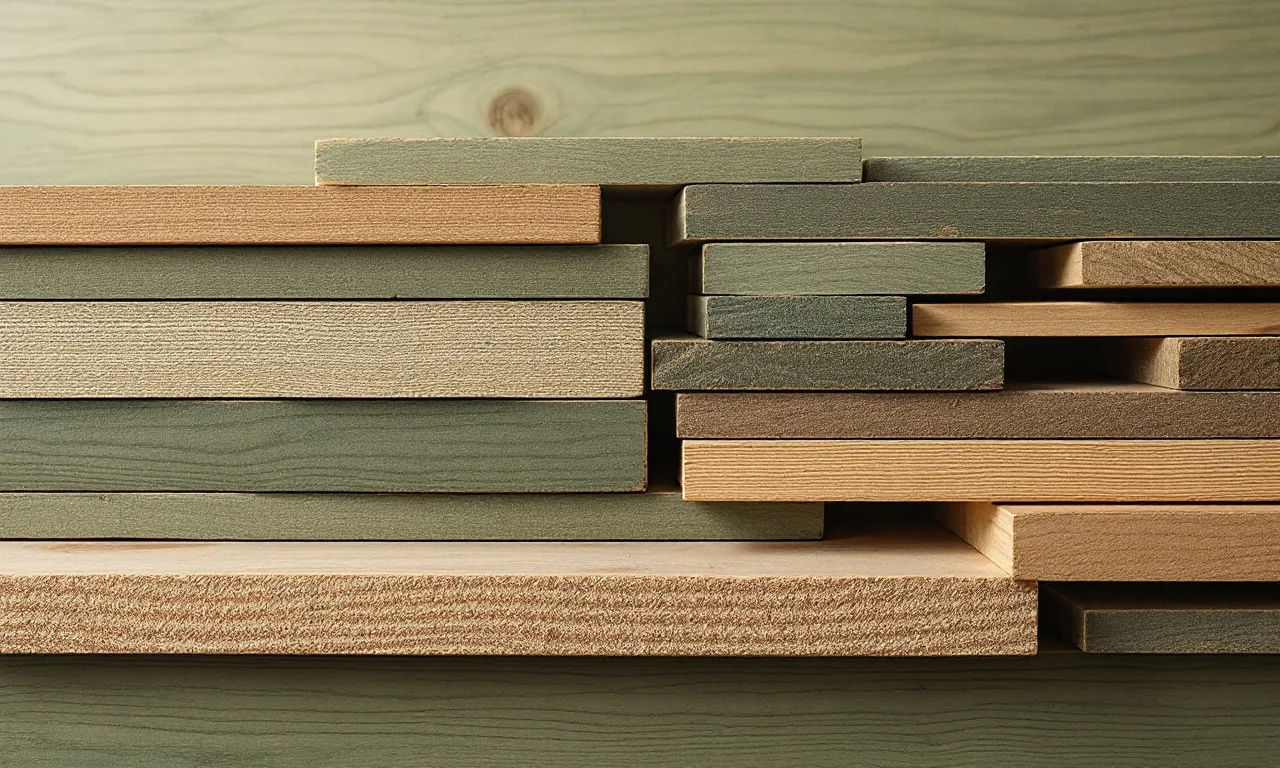
Pine boards or plywood for a utility shelf?
Compare the complete shelf project: appearance, edges, preparation, supports and the documented material.
11 Jun 2025 · Elise Tran