
Pine shelving or plywood wall panels for a garage with an EV charger?
How pine boards, plywood and OSB behave on a garage wall, and how to plan shelving around the area an electrician needs for an EV charger.
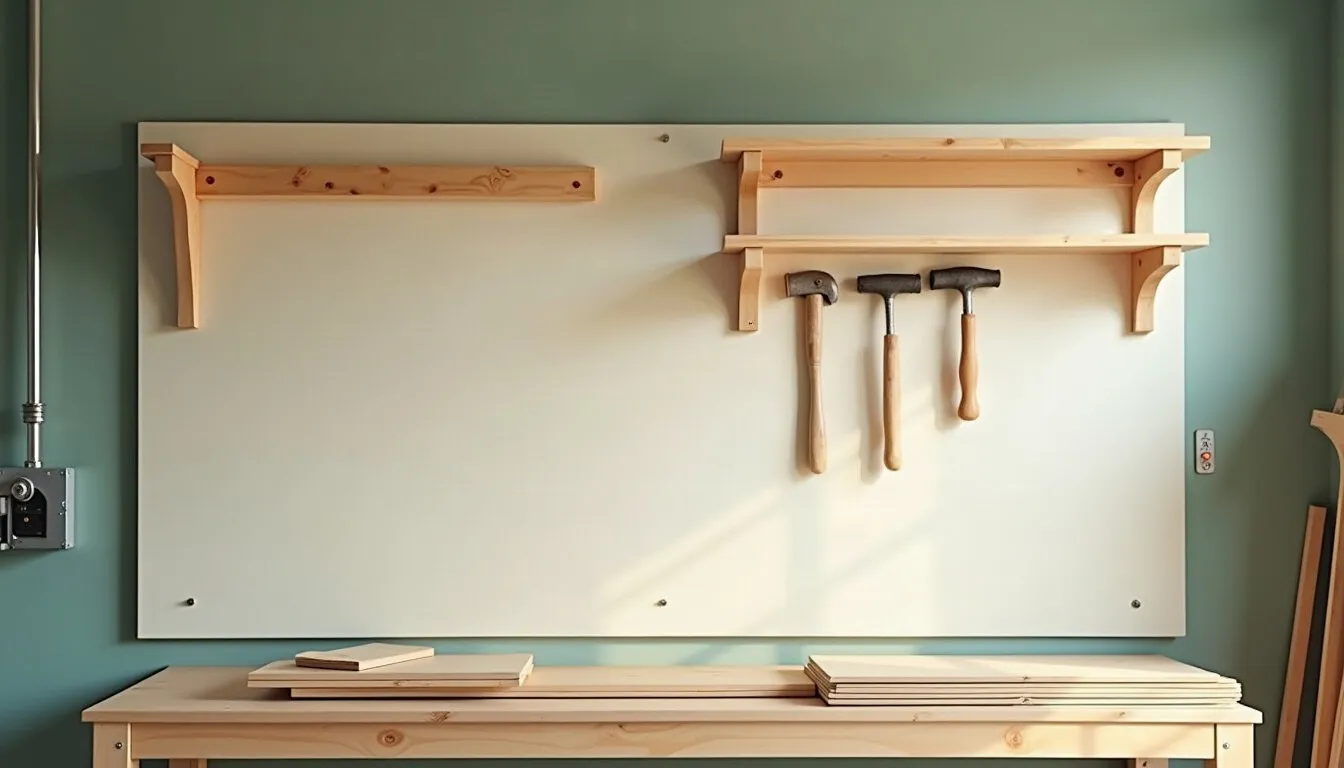
A garage wall that is about to receive an EV charger is also the wall most people want to cover with shelves, hooks and a plywood panel for tools. The charger and its wiring will claim a part of that wall, and the wood around them has to be planned with that in mind. The material question comes first: solid pine boards, plywood sheets or something else.
A licensed electrician handling EV charger installation Colorado Springs homeowners book can tell you where the unit, its cable and any wiring will run. This guide covers the wood: the difference between pine boards, plywood and oriented strand board, how each behaves on a garage wall and how to lay out shelving around an area that belongs to the electrician. It gives no electrical guidance. Every decision about the charger itself, its position and its clearances belongs to the electrician and the manufacturer's instructions.
Know the three common materials by name
Three materials cover most garage walls. Dimensional pine is solid softwood sawn into boards of standard nominal sizes, the trade names used at the yard, which are larger than the boards' actual dimensions. Plywood is made of thin wood layers called plies, glued with the grain of each layer turned across the one below it. Oriented strand board, usually called OSB, is made of flat wood strands pressed with resin into sheets, with the strands arranged in layers.
Each has a recognizable face. Pine shows continuous grain and knots. Plywood shows a single thin face veneer, which may be smooth or patched with oval plugs where knots were removed. OSB shows a pattern of overlapping flakes, with no continuous grain at all.
Read the grain before choosing a shelf
On a shelf, grain direction decides much of how the wood behaves. A pine board's fibers run along its length, which gives it stiffness in that direction and makes it a natural choice for a long, narrow shelf. Across its width, the same board moves with changes in humidity and can cup, curving across its face so that one side rises.
Plywood's crossed plies resist cupping and keep the sheet flat across its width, which is why it is used for wide shelves and wall panels. Its edges show the alternating layers, which some people like and others cover with a strip of solid wood. OSB is flat and stiff for its cost but has a rough face and edges that can absorb water quickly if they get wet.
| Material | Face and grain | Behavior on a garage wall | Who it suits |
|---|---|---|---|
| Pine boards | Continuous grain, visible knots | Can cup across the width; easy to cut and shape | Narrow shelves, cleats, trim |
| Plywood | Thin face veneer over crossed plies | Stays flat; edges show layers | Wall panels, wide shelves |
| OSB | Pressed flakes, no continuous grain | Flat and stiff; edges sensitive to water | Utility panels in dry spots |
Consider the garage climate
A garage in Colorado Springs is usually dry, and in winter it can be cold for long stretches, with large swings between a closed garage and a car brought in with snow on it. Dry air shrinks wood across the grain. Meltwater dripping from a car can wet the lower part of a wall and the bottom edges of any panel.
Keep the lowest wood off the floor and away from where snowmelt collects. A gap below a wall panel, or shelves that start at knee height or above on the wall where the car parks, avoid most of the trouble. Pine boards stored in a cold garage before being cut will also move once a heater runs or summer arrives, so it helps to let them sit in the garage for a while before building.
Leave the charger's area to the electrician
Before planning any shelving, ask the electrician to mark on the wall where the charger will sit, how the cable will hang or coil, and where any wiring or conduit will run. Ask in a full sentence: "Which part of this wall should stay clear of shelves, panels and fixings, and how far around the charger?" The answer depends on the unit and the installation, and it is not something to guess from a photograph.
Then mark that area on the wall with painter's tape and treat it as fixed. Do not cover wiring routes with a plywood panel, and do not drive fixings near them. If you want a wood panel on the same wall, ask the electrician whether it should be installed before or after their work, and whether it changes anything about how the charger is mounted.
Lay out the shelving around a fixed zone
With the charger's zone marked, the rest of the wall becomes a layout puzzle. Elevation sketches help here: a simple drawing of the wall face, with the charger zone shaded and the shelves drawn as horizontal lines. Draw the car's position on the floor plan below it, and mark where the doors open.
Plan heavy items low and to one side of the charger zone, lighter items high. Leave a clear path from the car's charging port to the charger that does not pass under shelves where someone might hit their head. If a pegboard or plywood tool panel is part of the plan, place it where you stand to work, not where the car door swings.
A hypothetical wall
This is an invented example of the planning, not a design.
A homeowner has one long side wall in a single-car garage. The electrician marks the charger near the front of the car, along with its cable route and a clear area around them. The homeowner shades that area on the sketch. The remaining wall is split into two zones: behind the charger zone, toward the garage door, a plywood tool panel at standing height; beyond it, toward the house door, narrow pine shelves on cleats, starting above knee height to stay clear of snowmelt.
The plywood panel stays flat, and its face takes hooks and screws well. The pine shelves are narrow enough that cupping is small, and their grain runs along their length, giving them stiffness for light storage. Nothing wooden enters the shaded zone.
Match the fastener to the material
Each material holds a screw differently. In pine, a screw driven into the face grain, across the fibers, grips well; one driven into end grain, the cut face at the end of a board, holds poorly and can pull out under load. Plywood holds screws well in its face because the crossed plies grip from several directions, but its edges can split if a screw is driven too close to them. OSB holds screws reasonably in its face and less well near its edges, which can crumble.
These differences matter most where a shelf cleat or panel meets the wall. How anything heavy is fixed to the wall framing is a question for the hardware maker's directions or a carpenter, not for a notebook. What the material choice decides is how the shelves and hooks attach to the wood itself. Note on your sketch which joints are into face grain and which are into ends or edges, and plan the stronger fixings for the face.
Plan the finish at the same time, because garage wood is easier to finish before it is fixed in place. Sand the faces and edges, ease the sharp corners and apply whatever finish you choose according to its directions. Pine's knots and resin can bleed through paint, so a primer suited to knots helps if the shelves will be painted. Plywood edges and OSB edges benefit from a coat of finish to slow the uptake of moisture.
Store the finished pieces flat and off the floor until they are fixed. A stack leaned against a wall in a cold garage can take on a curve that is hard to remove.
The pencil list
- Ask the electrician to mark the charger, cable route and clear zone on the wall before planning any wood.
- Sketch the wall face with that zone shaded and the car's position and door swings below it.
- Note which material each shelf or panel will use, and which way the grain runs on pine shelves.
- Measure the lowest height you want wood to start, clear of snowmelt from the car.
- Ask whether any panel should go up before or after the electrical work.
A garage wall works best when the electrician's area is drawn first and the wood fills what remains, so mark the clear zone in tape before you buy a single board.
Keep the notebook open.
Solid wood or plywood for a bathroom vanity?
How to tell what a bathroom vanity is really made of, how each material handles moisture, and what to ask before ordering one.
3 Nov 2026 · Jonah Mercer
A dust plan for a small woodworking space
Connect source capture, tool compatibility, filtration and maintenance in one practical workshop plan.
17 Nov 2025 · Mateo Briggs
Pine boards or plywood for a utility shelf?
Compare the complete shelf project: appearance, edges, preparation, supports and the documented material.
11 Jun 2025 · Elise Tran