
When shorter boards are the better purchase
Long boards look versatile, but they are not always the most useful purchase. If a project consists mostly of short parts, carefully selected shorter stock

Long boards look versatile, but they are not always the most useful purchase. If a project consists mostly of short parts, carefully selected shorter stock can reduce handling, storage and unused length. The saving only exists when the actual pieces fit the cut list with appropriate allowances.
Start with the restrictive parts. One long rail can determine the minimum stock length even when every other component is small. Do not let an attractive price on short boards persuade you to redesign that rail casually.
Turn the bundle into a part allocation
A hypothetical frame needs four rough blanks of 450 mm and two of 900 mm. The yard has inexpensive 600 mm shorts and more expensive 1,000 mm pieces. Six shorts contain 3,600 mm in total, which equals the sum of the required blank lengths. They still cannot supply either uninterrupted 900 mm blank. Total length is the wrong test for that part of the order.
Start by allocating the two long blanks to suitable longer pieces. Then inspect whether each short can provide one 450 mm blank after the necessary trimming and cutting allowance. A 600 mm advertised length gives only a nominal 150 mm difference; a split at each end or an inconvenient defect can consume it. Do not assume every piece in the bundle has the same clear yield because they share an overall length.
Write the board identifier beside each part identifier. If a longer piece leaves a usable offcut, count it only after the long blank and the actual cutting sequence have been allocated. The same attractive offcut cannot be reserved for two different small components. A sketch usually reveals this double counting sooner than a volume total.
The timber calculator can compare quantities on a stated dimension basis, but it cannot see a split or decide whether a joint may be added. A splice introduced to rescue a short piece changes the design. Resolve its suitability before using it to justify a purchase.
Compare two complete baskets
Suppose basket A consists of four shorts at 3 currency units each and two longer boards at 8 each. Its material subtotal is 28. Basket B uses six longer boards at 8 each, for 48. These invented prices illustrate a comparison method, not a current market quotation. Basket A looks cheaper only while its selected pieces meet all the actual requirements.
Add any minimum-order charge, cutting service, delivery and preparation costs to both baskets. If the short stock requires a special trip while the long stock is delivered with another order, the difference may narrow. Conversely, material that fits the available storage and an appropriate transport arrangement may simplify the project. Keep those advantages visible without turning them into a claim that short boards always save money.
Inspect neighboring visible parts together. Mixed shorts may provide all the dimensions but a very different grain and color pattern from matched pieces. Decide whether that variation suits the design before ordering, and retain representative finishing samples where appropriate.
Ask the supplier to define the stock rather than assuming shorts means defect-free offcuts. Species, preparation, moisture description and clear-size requirements still belong on the order checklist. The final comparison should name the parts each basket supplies, the unresolved assumptions and the total cost, not merely which pile has the lowest unit price.
A worked layout comparison
Imagine a project requiring four short rails, two medium-length sides and one longer top. A discounted short-stock bundle may cover the rails easily while failing to supply the top in one suitable piece. The first question is whether the bundle replaces part of the order or is being mistaken for the whole order.
Draw the top on an appropriate longer board, then consider whether its offcuts can already supply some rails. If they can, the short bundle may create duplicate material rather than a saving. If they cannot, selected short stock may be a useful supplement.
Keep each allocation visible. The same clear section should not be counted once as a rail and again as a finish sample or spare part. A few rectangles on paper can expose that double counting more clearly than a total-volume figure.
Compare clear length with overall length
A short board's overall length may include damaged ends that will be removed. Ask for the minimum clear length needed by the part, then inspect whether the actual board provides it with preparation allowance. Do not let a nominal length label conceal the usable limit.
A split near one end may be easy to see, while a knot or defect in the middle divides the board into two smaller zones. That can be acceptable for blocks and unsuitable for a rail. The same board can therefore be a good purchase for one list and a poor purchase for another.
If a supplier selects stock remotely, state the requirement in terms it can confirm. A request for enough short boards is less useful than a count of pieces with specified minimum clear dimensions and an agreed appearance description.
Think about batch preparation
Several short pieces may require more individual handling than one longer blank from which parts are prepared through a suitable safe sequence. Consider that work when comparing cost. The right sequence depends on the tools, dimensions and safe holding methods, not just the convenience of the list.
Do not cut stock into tiny final pieces prematurely if a later operation would be safer or more controlled on a larger blank. Obtain appropriate instruction for the equipment and task. A bargain in short stock should not pressure you into an unsuitable machine setup.
Where a preparation service is needed, ask whether the short dimensions fall within the provider's normal capability. Minimum workpiece size and handling restrictions can make a service unavailable even when the material appears simple.
Evaluate mixed bundles cautiously
A mixed bundle can be attractive if its contents are known and the project is flexible. It can also conceal a large amount of material that has no useful role. Ask for a tally or inspect the pieces rather than valuing the bundle entirely by its headline volume.
Separate species, treatment and condition questions from dimensions. Similar-looking short boards are not necessarily interchangeable. If identification is unclear, avoid assigning the material to a use that depends on a known history or documented property.
For appearance work, compare neighboring pieces together. A bundle assembled from many sources can require more selection and more finish sampling than a consistent set of boards. That additional work belongs in the decision even when the raw price is low.
Account for transport and storage honestly
Shorter stock may fit an available vehicle or storage area more readily, but it still needs secure transport and appropriate support. Follow applicable transport rules and use suitable equipment. Do not assume a small board is harmless if it is loose or poorly secured.
At the workshop, keep the pieces identifiable. A shelf full of short boards becomes difficult to use when species, dimensions and project allocations are mixed. A simple labeled stack can preserve the advantage of buying manageable lengths.
If the purchase is for a future project, consider whether the dimensions will remain useful when that design becomes specific. Stock bought merely because it fits the car can become expensive clutter if it does not fit later parts.
Decide what counts as a saving
A saving should compare complete suitable options. Include the long stock still needed, preparation, delivery and realistic retained material. Do not subtract the full retail value of every offcut as though it were guaranteed to replace a future purchase.
Write the reason for the choice in one sentence. Short stock supplies the four rails without buying another full board is a concrete reason. It was cheap is not enough to show that the project cost improved.
After the build, compare the actual yield with the plan. Keep the useful lesson specific to the type of parts and stock involved. One successful short-board purchase does not establish that the shortest available stock is always the best choice.
Sources and scope
For background on commercial lumber and dimensional descriptions, consult chapter 6 of the USDA Wood Handbook. The examples here are planning methods rather than claims about a particular seller's stock or prices.
Keep the notebook open.
How to choose wood for a surfboard rack in a humid garage
How to pick, check and buy softwood for a simple surfboard rack that will live with salt, sand and damp air in a Florida garage.
14 Oct 2026 · Jonah Mercer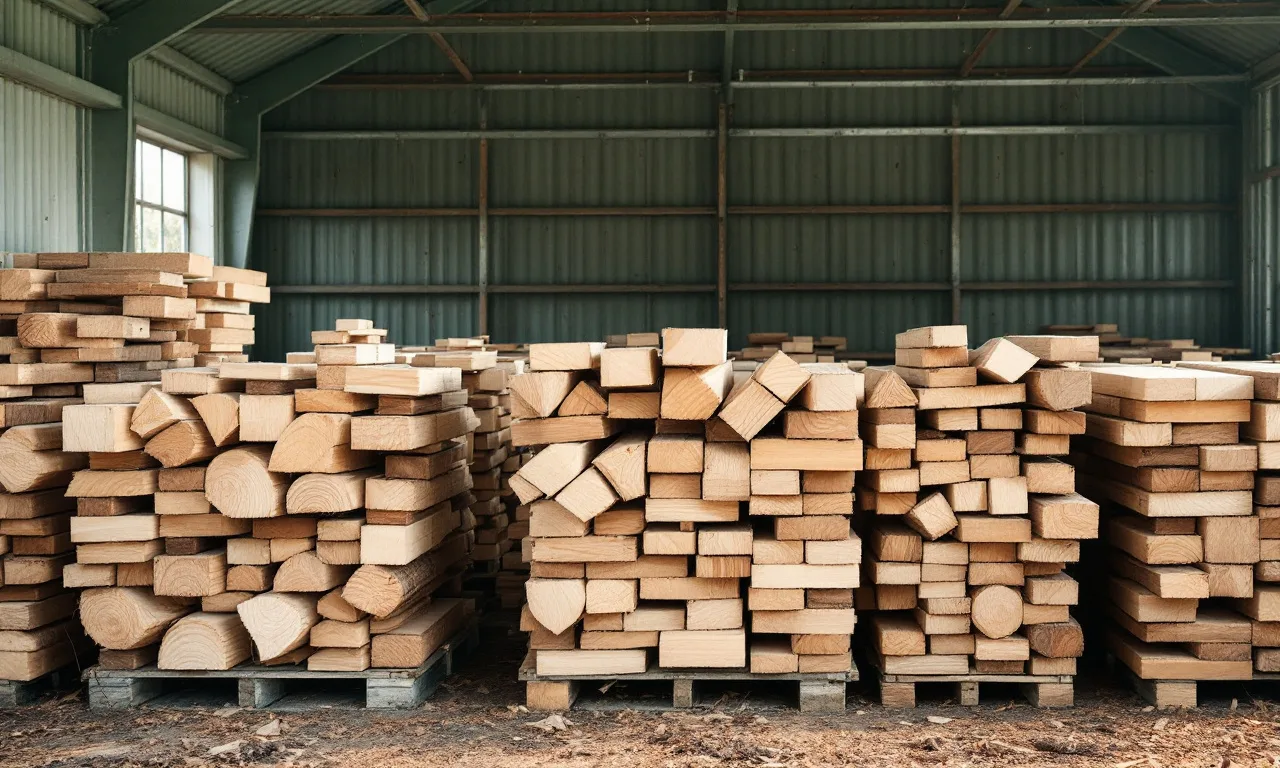
The timber order checklist: grade, moisture and delivery
Put species, grade, dimensions, moisture condition and delivery in one written record before paying.
21 Mar 2025 · Jonah Mercer
Choosing a moisture meter for a small woodshop
Compare measuring method, depth, species correction and calibration before choosing a meter for your stock.
26 Apr 2024 · Jonah Mercer